Scenario 1: Worst Case
Back to Scenarios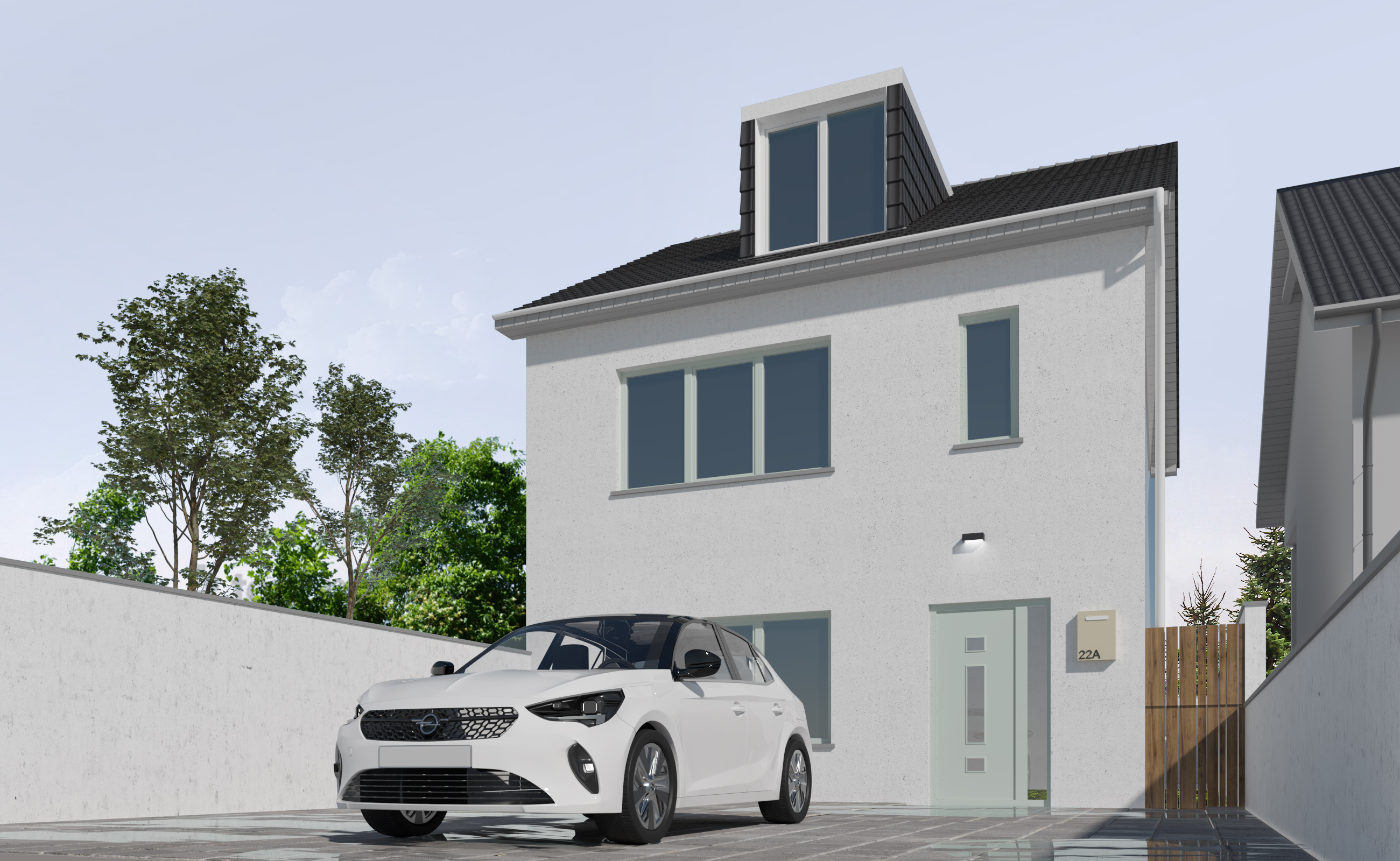
Description
Complete Hardscape (Fully Paved Front and Back Yards),
Features
- Visually Unappealing
- Higher Carbon Footprint
- Significantly Reduced Urban Biodiversity
Runoff and Infiltration Volumes Over Time
The difference between the worst and best scenarios is striking—approximately 1,650 cubic meters of water. To put it in perspective, that's the same amount of water that this Dublin neighborhood, with its 260 homes, would use in an entire month
Runoff Discharge Over Time
The worst-case scenario with a discharge rate of 0.73 cumecs could fill an Olympic-sized swimming pool in just 1 hour. But in the best case, with a discharge rate of 0.52 cumecs, it would take about 1.5 hours. That’s the difference smarter, greener planning in a single neighborhood can make!
Description
Complete Hardscape (Fully Paved Front and Back Yards),
Features
- Visually Unappealing
- Higher Carbon Footprint
- Significantly Reduced Urban Biodiversity
Runoff and Infiltration Volumes Over Time
Buildings Saved: From 64 buildings saved with moderate interventions in our gardens to 123 buildings saved with rewilded gardens and green roofs, all from just one extreme storm event—each step towards greener designs means more homes and infrastructure are protected from flooding.
Runoff Discharge Over Time
Cost Saved: From €660,000 saved in the moderate scenario to a remarkable €1.41 million in the best-case scenario with green roofs, all from just one extreme storm event—and just for residential buildings! Our green gardens make Dublin economically more sustainable!